

Introduction: “Zirconia” Is a Material Family, Not One Product
When you purchase a zirconia crown, you are not purchasing one fixed material. Zirconia crowns material can vary, and that’s why two “zirconia” crowns from different cases—or different labs—may look and seat differently.
To get consistent results, you only need to lock in three things before production starts:
- Zirconia type (3Y / 4Y / 5Y) — controls the balance between strength and translucency.
- Case match (posterior / anterior / implant / bruxism) — each case needs a different material priority.
- Cementation plan — retention and contamination control affect long-term stability.
In this guide, you’ll get a simple way to purchase the right zirconia material, reduce chairside adjustment, and keep outcomes predictable with SF Dental Lab.
What Is Zirconia Crowns Material?
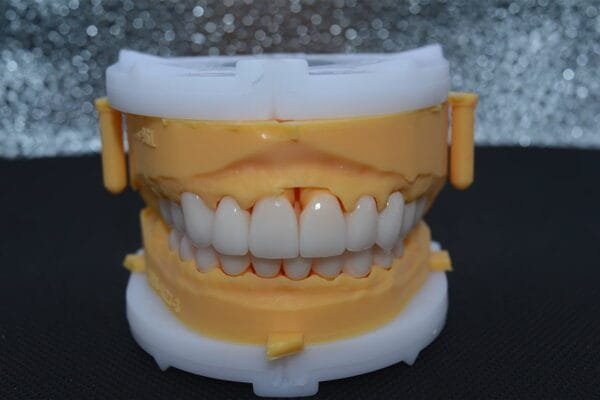
When you purchase a “zirconia crown,” you are purchasing a high-strength ceramic made from zirconium dioxide (often called zirconia). In dentistry, zirconia is valued because it is durable, stable in the mouth, and suitable for long-term restorations—especially when you need predictable function with a clean, modern esthetic.
What makes zirconia different from many other crown materials is that it is not a glass-based ceramic. In simple terms, that means zirconia is built more like a dense crystal structure, so it typically performs better under biting forces and is less likely to crack in high-load areas. This is why zirconia is commonly used for posterior crowns, implant crowns, and cases where strength and longevity are priorities.
Why “Zirconia Material” Is Not One Single Product
Here is the key point that saves you time and remakes: zirconia crowns material is not one fixed grade. Different zirconia types are engineered to balance two competing goals:
- Strength (how well it resists fracture under load)
- Translucency (how natural it looks under light)
So if one zirconia crown looks more natural but feels “less tough,” and another is extremely strong but looks more opaque, that is usually not a lab “mistake”—it is often a material choice and processing choice.
What You Should Focus on When You Purchase Zirconia Crowns
To keep this simple and practical, you do not need to memorize material science. You only need to confirm three things before production starts:
- Which zirconia type is being used (3Y / 4Y / 5Y).
This is the most direct way to understand where the crown sits on the strength–esthetics spectrum. - Whether the crown is monolithic or layered.
Monolithic zirconia is one solid material (often higher reliability). Layering can improve esthetics in selected cases, but it must be justified. - How shade and surface finish will be controlled.
Shade consistency and a proper polished surface are not “small details”—they directly affect chairside adjustment time, opposing wear risk, and the final look.
At SF Dental Lab, zirconia cases start with the same goal you have: a crown that seats cleanly, looks natural for the indication, and stays stable after cementation. That predictability comes from matching the zirconia material grade to the case, then controlling the milling, sintering, shade workflow, and final finishing standard before shipment.
In the next section, you’ll see the simplest way to purchase the right zirconia material—3Y vs 4Y vs 5Y—without overcomplicating your decision.
Section 2: 3Y vs 4Y vs 5Y Zirconia (The Only Material Choice You Really Need)
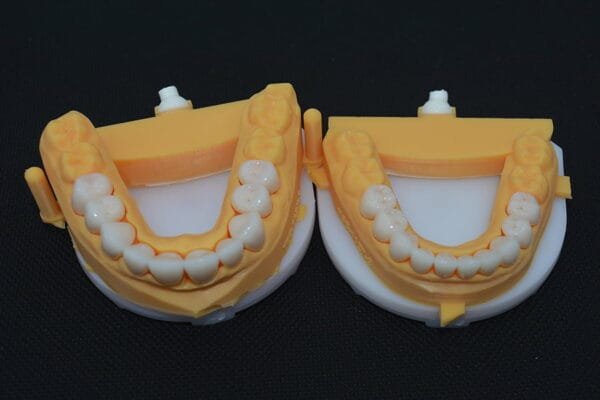
If you want zirconia crowns that seat well, look right for the case, and stay stable after cementation, your first decision is simple: purchase the right zirconia type. Most zirconia crowns material options used in labs can be grouped into three categories—3Y, 4Y, and 5Y. These labels mainly tell you how the material is engineered to balance:
- Strength (how well it resists fracture under bite force)
- Translucency (how natural it looks under light)
3Y Zirconia: Highest Strength, Most Reliable for Function
What it’s best for: posterior crowns, heavy bite cases, bruxism risk, limited clearance situations.
3Y zirconia is the “workhorse” option. It is usually the safest purchase when your priority is durability and long-term function. If your patient is a strong chewer or the preparation is not ideal, 3Y is often the most forgiving material choice.
What to expect: strong and stable, but typically more opaque than higher-translucency zirconia.
When to specify 3Y:
- Molars and high-load posterior cases
- Bruxers or patients with parafunction
- Thin occlusal clearance where you still need strength
4Y Zirconia: Balanced Strength and Esthetics (Most Common Choice)
What it’s best for: the majority of everyday crowns, including many premolars and some anterior cases.
4Y zirconia is often the best “default” when you want a more natural appearance than 3Y while keeping a strong safety margin for function. For many clinics, this becomes the most practical option because it reduces the risk of looking too opaque without pushing the material into a purely esthetic category.
What to expect: more lifelike than 3Y, with strong performance for most single crowns.
When to specify 4Y:
- Premolars and mixed esthetic-functional cases
- Anterior crowns where you need improved translucency but still want reliability
- Patients with normal bite force who still need durable restorations
5Y Zirconia: Higher Translucency for Esthetic Priority
What it’s best for: anterior esthetic zones where the look matters more than maximum strength.
5Y zirconia is designed to deliver higher translucency, so it can look more natural under bright operatory lighting—especially for anterior restorations. This is a strong option when your goal is an esthetic upgrade, but it should be specified with more intention for case selection.
What to expect: improved translucency, but typically a smaller strength margin compared with 3Y and 4Y.
When to specify 5Y:
- Anterior crowns with high esthetic expectations
- Cases where shade blending and light transmission are the priority
- Patients without heavy bite or parafunction risk
A Simple Purchase Rule You Can Use Immediately
If you want a fast way to specify zirconia crowns material in your lab Rx:
- Purchase 3Y when function and risk control are the priority.
- Purchase 4Y when you need a safe balance for most cases.
- Purchase 5Y when esthetics is the main requirement and bite force is lower.
At SF Dental Lab, you can send the case indication (posterior/anterior/implant/bruxism) and your esthetic priority, and you’ll receive a clear 3Y/4Y/5Y recommendation before production starts—so you avoid the most common zirconia problems: crowns that look too opaque, feel too tight, or do not match the case risk level.
In the next section, you’ll see where zirconia performs best by indication—and how to avoid the most common failure points before the crown is even made.
Section 3: Where Zirconia Works Best (Practical Indications)
Zirconia is a reliable choice when the case type matches the material priority. Use the indication first, then confirm the zirconia type (3Y/4Y/5Y) to keep results consistent.
Posterior Crowns (Molars & Premolars)
Posterior crowns are mainly about strength and long-term function. Zirconia performs very well here, especially for patients with heavy bite forces or limited clearance. In most posterior cases, 3Y or 4Y is the safer purchase because it keeps a stronger margin against fracture and reduces remake risk.
Anterior Crowns (Esthetic Zone)
Anterior crowns are mainly about translucency and shade control. Zirconia can work very well, but the material choice must be more intentional. 4Y or 5Y is often used when esthetics is the priority. To avoid “too white” or “too opaque,” your best leverage is good shade inputs—shade selection plus clear photos when possible.
Implant Crowns
Implant crowns often benefit from zirconia because you typically want strength, stability, and clean contours for hygiene. Many implant cases are best supported by 3Y or 4Y, plus clear lab instructions on the implant system, retention type (screw vs cement), and occlusion notes.
Bruxism / High-Risk Bite Cases
For bruxers, zirconia should be purchased as a risk-control solution. 3Y is commonly preferred for maximum strength, and the finishing request matters: a high-polish occlusal surface helps reduce opposing wear concerns after adjustment.
Key takeaway: Posterior, implant, and bruxism cases usually prioritize strength (often 3Y/4Y). Anterior cases prioritize optical performance (often 4Y/5Y) and require stronger shade communication.
Section 4: What Can Go Wrong (And How You Prevent It Upfront)
Most zirconia crown problems are not “zirconia problems.” They usually come from a mismatch between material choice, case design, and workflow control. If you prevent the common issues before production starts, you save chairtime and reduce remakes.
Issue 1: The Crown Looks Too White or Too Opaque
This happens when the zirconia type and shade workflow do not match the esthetic goal, especially in the anterior zone. Prevention is straightforward: specify the case as “esthetic zone,” confirm whether you want 4Y or 5Y, and provide clear shade information (shade tab, photos when available, and stump shade for challenging cases).
Issue 2: Seating Feels Tight or the Crown Doesn’t Fully Seat
A tight seat is usually caused by prep/scan limitations or internal fit interference—not by the zirconia material itself. Prevention starts with clean margins and accurate scans, then continues in the lab with controlled milling and sintering. From your side, the most helpful input is a clear margin and stable bite record; from SF Dental Lab’s side, the key is strict internal fit control and final QC before shipment.
Issue 3: Wear or Roughness After Occlusal Adjustment
Zirconia can become abrasive if the surface is left rough after adjustments. Prevention is to request a polished finish standard, especially for posterior and bruxism cases. Polishing quality matters more than “gloss” marketing terms, because it directly affects opposing wear risk and patient comfort.
Issue 4: Debonding After Cementation
Debonding is typically related to low retention, contamination during try-in, or using a cement protocol that does not match the case. Prevention is simple: if retention is good, conventional cementation may be acceptable; if retention is weak (short prep, minimal taper control, limited height), plan for a resin-based approach with the correct zirconia primer and better isolation.
Key takeaway: You reduce zirconia failures by confirming the zirconia type for the indication, protecting seating with good margin/scan quality, requiring a polished surface finish, and matching cementation to retention risk.
Section 5: Zirconia vs eMax Crowns vs PFM (A Fast Decision Guide)
When you purchase crowns regularly, the goal is not to find a single “best” material. The goal is to purchase the most suitable material for the case, so you reduce remakes, shorten chairtime, and keep outcomes consistent. Zirconia crowns material, eMax crowns, and PFM crowns each perform best in different clinical situations.
When Zirconia Is the Safest Purchase
Zirconia is usually the most predictable purchase when you need strength, stability, and long-term function. It is commonly used for posterior crowns, implant crowns, and higher-load cases because it offers a strong safety margin. If your priority is durability and consistent delivery across routine cases, zirconia is often the most scalable option.
When eMax Crowns Are the Better Esthetic Tool
eMax crowns are typically purchased when the main goal is natural light behavior and high esthetic detail, especially for anterior restorations. If your case requires translucency and lifelike blending, eMax crowns can be a very effective choice. The trade-off is that eMax crowns usually require more careful case selection for higher-load situations compared with zirconia.
When PFM Crowns Still Make Sense
PFM crowns can still be a practical purchase when you need a proven solution under certain constraints, such as specific margin requirements, limited space in some situations, or when a metal substructure is preferred for functional reasons. The trade-off is usually esthetics around the margin and a different overall appearance compared with full-ceramic restorations.
A Simple Daily Decision Rule
If the case is posterior, implant-related, or has higher fracture risk, zirconia is often the safer purchase. If the case is anterior and esthetics is the top priority, eMax crowns may be the more suitable choice. If you have structural constraints where a metal substructure helps, PFM crowns can still be justified.
At SF Dental Lab, you can share the case type and esthetic priority, and you’ll get a recommendation that matches real-world function—so you avoid purchasing eMax crowns for high-load bruxism cases or purchasing zirconia for a case where maximum translucency is the main requirement.
Section 6: How SF Dental Lab Controls Zirconia Quality (So Your Results Stay Consistent)
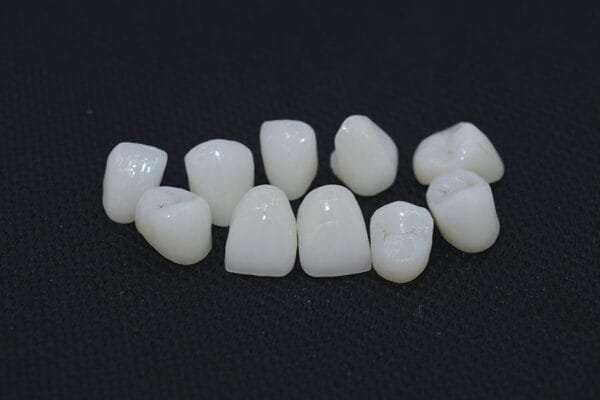
When you purchase zirconia crowns, the material type (3Y/4Y/5Y) is only the starting point. Your chairside experience is determined by how the lab controls fit, shade, and surface finish. Here is how SF Dental Lab builds that control into every zirconia case.
Consistent Zirconia Material Management
Your zirconia case starts with controlled material input. SF Dental Lab uses standardized zirconia materials and keeps batch-level consistency in mind, so your repeat cases stay predictable in translucency behavior and overall appearance—especially important when you are matching multiple units or continuing treatment plans over time.
CAD/CAM Workflow Built for Seating Accuracy
Your crown is designed and milled with seating in mind, not just anatomy. SF Dental Lab focuses on margin clarity, internal fit parameters, and contact design during CAD, then follows controlled CAM milling to reduce tight seating and unnecessary chairside adjustment. The goal is simple: you should get crowns that seat cleanly with minimal correction.
Sintering Control for Fit Stability
Sintering is where zirconia “becomes final,” and it directly affects shrinkage behavior and fit. SF Dental Lab uses controlled sintering workflows to keep dimensions stable and reduce common issues like distortion, open margins, or unexpected tightness after firing.
Shade Workflow That Matches Clinical Reality
Shade success is rarely about one line on the Rx form. SF Dental Lab uses your case information—shade selection, photos when available, and stump shade for challenging esthetic cases—to align zirconia type and characterization approach with your esthetic goal. This helps you avoid the two most common zirconia complaints in esthetic zones: “too white” and “too opaque.”
Surface Finish Standards That Protect Function
For zirconia, surface finish is a clinical requirement. SF Dental Lab applies controlled finishing and polishing standards—especially for posterior and bruxism-risk cases—so your occlusal surface stays smooth, adjustment-friendly, and safer for opposing wear performance.
Final QC That Saves Your Chairtime
Before shipment, SF Dental Lab checks the items that typically cost your clinic time: margin integrity, internal fit, proximal contacts, occlusion contacts, and surface smoothness. This QC step is built to reduce surprises at delivery and lower remake risk.
Practical takeaway: When you send case type (posterior/anterior/implant), bite risk (normal/bruxism), and esthetic priority, SF Dental Lab can align material choice, fit control, shade workflow, and finishing standard—so your zirconia crowns arrive predictable, not variable.
Section 7: Conclusion — How You Get Predictable Zirconia Crowns
Zirconia crowns work well when you purchase the material with clear rules. “Zirconia crowns material” is not one fixed product, so the best result comes from matching the zirconia type to the case.
If you want consistent outcomes, focus on three points. First, confirm the zirconia type: 3Y for strength, 4Y for balance, and 5Y for higher esthetics in lower-risk cases. Second, make sure the preparation and scan capture clean margins, because fit problems usually start there. Third, follow a cementation plan that matches retention risk, and keep the crown clean after try-in to reduce debonding risk.
When these steps are controlled, zirconia crowns usually seat with fewer adjustments, look correct for the indication, and stay stable long-term.
Send your case notes to SF Dental Lab—case location, esthetic priority, and bite risk—and you’ll receive a clear zirconia material recommendation plus a production plan designed to reduce chairtime and remakes.

 +86-13530819074
[…] Zirconia crowns are dental restorations made from zirconium dioxide, a ceramic material known for exceptional strength and durability. In modern dentistry, zirconia is widely used when reliability and long-term performance matter more than ultra-high translucency. […]