
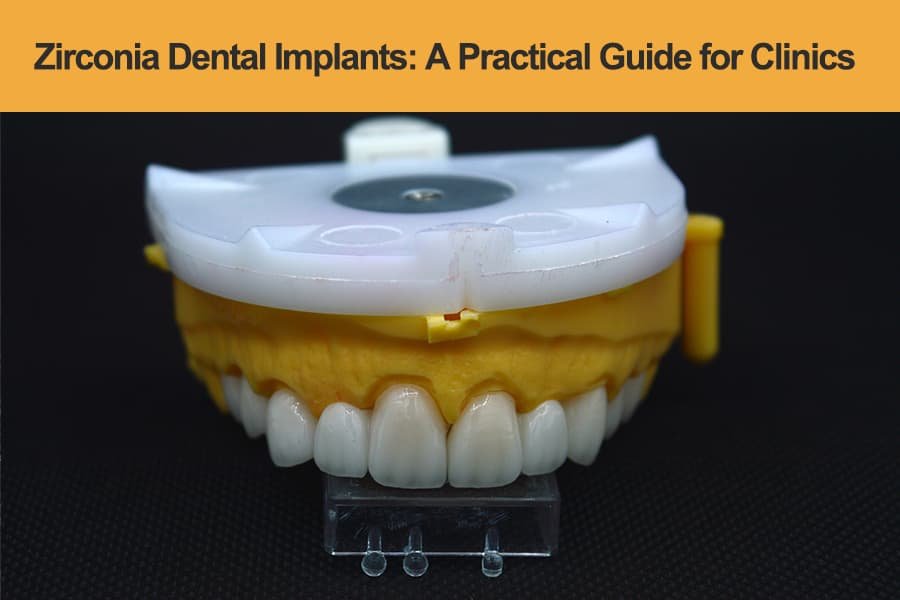
Introduction to Zirconia Dental Implants
Why “zirconia dental implants” is a hot topic now
In the last few years, zirconia dental implants have moved from a niche option to a serious part of many clinics’ treatment planning. More patients are asking for metal-free solutions, are worried about allergies, or simply want the most natural-looking result—especially in the front teeth. At the same time, material science and CAD/CAM technology have made modern zirconia much stronger and more predictable than earlier generations.
For dentists and implant centers, this creates both an opportunity and a challenge:
-
Opportunity – offer a premium, metal-free implant option that can differentiate your clinic.
-
Challenge – understand when zirconia implants are truly suitable, and how to partner with a lab that knows how to handle these cases.
This article is designed to give you a practical overview so you can decide when and how to use zirconia dental implants with confidence.
SF Dental Lab at a glance
SF Dental Lab is a digital dental lab that works with dentists and clinics worldwide, with a strong focus on zirconia-based restorations and implant prosthetics. Over the past years, we’ve supported a wide range of implant cases, from single anterior zirconia crowns to full-arch implant bridges.
Key strengths we bring to zirconia implant cases:
-
Expertise in zirconia
We routinely produce multilayer zirconia crowns, bridges, and full-arch prostheses. This daily experience helps us choose the right type of zirconia (high translucency vs high strength) for each indication. -
Digital CAD/CAM workflow
SF Dental Lab works with major intraoral scanner files and implant libraries. Our CAD designers focus on emergence profile, soft-tissue support, and occlusion so that zirconia implant restorations don’t just look good on screen—but also fit and function properly in the mouth. -
Competitive lab fees for global clients
By combining a digital workflow with efficient production in China, we can offer consistent quality at competitive prices, which is especially important for more costly materials like zirconia. Many overseas clients use us to add a zirconia implant option without pushing their fees beyond what local patients will accept. -
Communication and support
Our technicians and case managers communicate in clear, simple English. We’re used to receiving photos, CBCT screenshots, and clinical notes and turning them into predictable lab results.
What Are Zirconia Dental Implants?
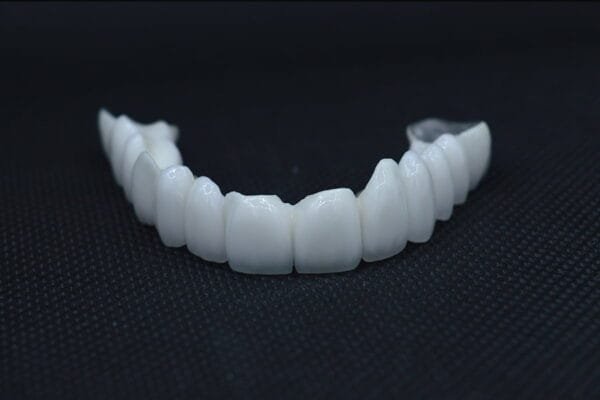
Basic structure of a dental implant system
Before we talk about zirconia dental implants, it’s helpful to review the basic parts of any implant case. In most situations, a complete implant-supported restoration includes three main components:
-
Implant fixture (implant body)
-
This is the screw-shaped part placed into the jawbone.
-
It acts as an artificial root and osseointegrates with bone over time.
-
-
Abutment
-
The connector between the implant body and the final crown or bridge.
-
Can be stock or custom-made, and can be made of titanium, zirconia, or a titanium base combined with a zirconia sleeve.
-
-
Final restoration (crown, bridge, or full-arch prosthesis)
-
The visible part in the mouth.
-
Often made from zirconia or other ceramics for esthetics and strength.
-
When we say “zirconia dental implants,” we might be talking about:
-
The implant body itself made from zirconia, or
-
A titanium implant combined with zirconia abutments and zirconia crowns/bridges for a mostly metal-free appearance above the gum line.
As a dental lab, SF Dental Lab focuses on the abutment and restoration components, making sure the visible parts look natural and function well.
Zirconia as an implant material
Zirconia (zirconium dioxide, ZrO₂) is a high-performance ceramic, not a metal, even though it comes from the element zirconium. When stabilized with yttria, it gains excellent mechanical and physical properties:
-
High strength and toughness compared to traditional ceramics
-
White, tooth-like color, which helps in esthetic zones
-
Good biocompatibility, with favorable tissue response
-
Low plaque accumulation compared with some metallic surfaces
In fixed prosthetics, zirconia has become a core material for:
-
Single crowns
-
Multi-unit bridges
-
Full-arch implant restorations
When used in implant dentistry, zirconia can be:
-
The implant body itself (ceramic implant systems), or
-
The abutment and/or restoration material placed on top of titanium implants.
From a lab perspective, SF Dental Lab mainly works with zirconia abutments and zirconia crowns and bridges. We carefully select the appropriate type of zirconia (for example, high-translucency for anterior esthetics or stronger zirconia for posterior and full-arch cases) and design it digitally to support both esthetics and mechanical performance.
Types of zirconia implant solutions
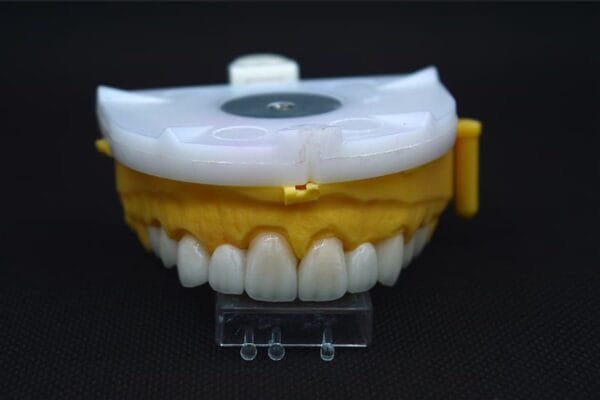
Clinically, there are several ways zirconia is used in implant cases. The main options include:
1. One-piece zirconia implants
-
The implant body and abutment are made as a single piece from zirconia.
-
Advantages:
-
Metal-free from root to crown interface
-
No abutment screw interface, which may reduce microgaps
-
-
Limitations:
-
Less flexibility in angulation and occlusal adjustment
-
Requires very precise surgical placement
-
Not suitable for all clinical situations
-
As a lab, we mainly come in at the restoration stage, fabricating zirconia or other ceramic crowns that fit over the prepared abutment portion.
2. Two-piece systems with zirconia components
Here, zirconia is used in combination with more conventional implant systems:
-
Titanium implant body + zirconia abutment + zirconia crown
-
Very common in esthetic areas
-
Combines the long-term predictability of titanium with the esthetic advantages of zirconia at the tissue level and in the visible crown
-
-
Titanium implant body + titanium base (Ti-base) + custom-milled zirconia abutment and crown
-
A hybrid approach that improves fit and screw access while keeping a zirconia emergence profile and crown.
-
SF Dental Lab frequently produces custom zirconia abutments on Ti-bases and matching zirconia crowns. This approach offers:
-
Good mechanical stability at the implant–abutment interface
-
Precise digital design of gingival contour and emergence profile
-
Excellent color and translucency control for the final esthetic result
3. Full-arch zirconia implant bridges
For full-arch reconstructions, zirconia can be used to create:
-
Screw-retained, full-arch zirconia bridges on multiple implants
-
Hybrids with titanium frameworks and zirconia layering or monolithic zirconia structures
These restorations:
-
Provide high strength and rigidity
-
Allow natural tooth shape and esthetic characterization
-
Can be designed digitally and milled with high accuracy
SF Dental Lab supports dentists with full-arch zirconia designs by:
-
Working from digital scans and CBCT-based planning
-
Designing frameworks, gingival contours, and tooth forms in CAD
-
Providing try-in options (PMMA or printed prototypes) before finalizing the monolithic zirconia bridge
In short, zirconia dental implants can mean a fully ceramic implant solution or a titanium-based system with zirconia components in the esthetic zone. In both scenarios, the quality of the lab work—especially the design and fabrication of zirconia abutments and restorations—is critical. In the next section, we’ll look more closely at the key advantages of zirconia dental implants and when they offer clear benefits over traditional titanium solutions.
Key Advantages of Zirconia Dental Implants
100% metal-free and hypoallergenic
One of the biggest reasons patients ask about zirconia dental implants is simple: they want a metal-free option.
-
No visible metal
Zirconia (zirconium dioxide) is a high-strength ceramic, not a metal. For patients who are anxious about “metal in the mouth”, zirconia offers a reassuring alternative. -
Option for sensitive or allergy-concerned patients
True titanium allergies are rare, but some patients report sensitivity concerns or have a strong preference to avoid metal. In these situations, a zirconia implant or a titanium implant with zirconia abutment and crown can be an excellent compromise. -
Clear marketing message for clinics
Being able to offer “metal-free implant solutions” helps clinics stand out, especially in markets where holistic or biologically oriented dentistry is growing. SF Dental Lab helps support this by providing consistent, high-quality zirconia abutments and restorations to match your treatment plans.
Superior esthetics in the smile zone
For anterior implant cases, esthetics often decide whether a patient accepts a treatment plan. Zirconia offers clear advantages here:
-
White, tooth-like core
Unlike gray titanium, zirconia is naturally white. When used for the implant body (in fully ceramic systems) or for abutments and crowns, this reduces the risk of a dark shadow shining through thin gingiva. -
Better result in thin tissue biotypes
In patients with thin, translucent soft tissue, titanium implants can show a grayish hue at the gingival margin, especially if tissue recedes over time. Zirconia components help maintain a more natural, warm color. -
Smooth transition from implant to restoration
With custom zirconia abutments and full zirconia crowns/bridges, SF Dental Lab designs the emergence profile, cervical color, and incisal translucency as a single visual unit. This makes it easier to blend the implant crown with adjacent natural teeth or zirconia crowns.
For dentists who place many implants in the esthetic zone, offering a zirconia-based solution can make a visible difference in final case photos—and in patient satisfaction.
Biocompatibility and low plaque accumulation
Zirconia is well-known for its favorable soft-tissue response:
-
Healthy soft tissue around zirconia
Studies and clinical experience suggest that gingiva often shows good attachment and less inflammation around zirconia compared with some metallic surfaces, especially when the surface is polished and properly contoured. -
Potentially lower plaque build-up
A smooth zirconia surface can accumulate less plaque and calculus than rough or scratched metal surfaces. This is helpful for long-term maintenance, especially in patients who are not perfect with home care. -
Support for peri-implant health
While good hygiene and regular maintenance are still essential, zirconia components can be part of a strategy to reduce peri-implant soft-tissue problems.
At SF Dental Lab, we design and polish zirconia abutments and crowns with attention to contour and surface quality in the transmucosal area, which supports easier cleaning and healthier tissue long term.
Strength, durability, and fracture resistance with modern zirconia
Older generations of ceramic materials had a reputation for being brittle. Modern implant-grade zirconia is different:
-
High flexural strength
Yttria-stabilized zirconia offers very high flexural strength compared with traditional ceramics. Properly designed zirconia crowns, bridges, and full-arch prostheses can withstand normal chewing forces when indications are respected. -
Monolithic designs reduce chipping
Monolithic zirconia restorations remove the weak interface between a ceramic core and layered porcelain. This reduces chipping and makes both single crowns and full-arch bridges more durable. -
Optimized material selection
-
High-translucency zirconia for anterior teeth and esthetic zones.
-
Higher-strength zirconia formulations for posterior or full-arch cases.
-
SF Dental Lab selects zirconia types based on case requirements, not “one material for everything.” This helps balance strength and esthetics and reduces the risk of complications.
Of course, case selection is still important—heavy bruxers, long cantilevers, and extreme load cases require careful planning or may still be better suited for titanium-based frameworks.
Comfort and thermal properties
Patients may not know the term “thermal conductivity,” but they often feel the difference:
-
Less sensitivity to hot and cold
Zirconia does not conduct temperature the way metal does. When zirconia abutments and crowns are used, patients can experience less sensitivity to hot or cold compared with some metal-based restorations. -
Smooth, pleasant surface
A well-polished zirconia surface feels smooth to the tongue and cheeks. This contributes to overall comfort, especially in full-arch zirconia bridges where large surfaces contact soft tissue. -
Natural “tooth-like” feel
Many patients report that zirconia implant restorations feel more like natural teeth than metal-based prostheses, both visually and in daily function.
Taken together, these advantages explain why zirconia dental implants—whether fully ceramic systems or titanium implants restored with zirconia components—are becoming more popular. In the next section, we’ll balance these benefits by looking at the limitations and clinical considerations you should keep in mind when planning zirconia implant cases.
Limitations and Clinical Considerations of Zirconia Implants
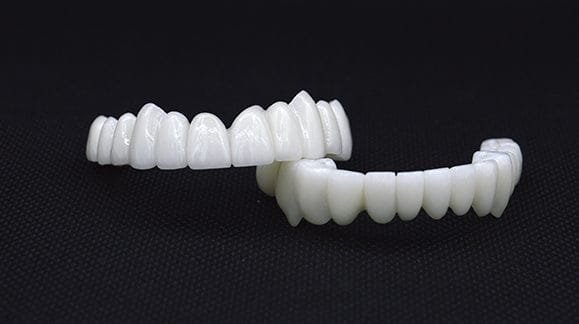
Mechanical and design limitations
Even though zirconia dental implants are strong, they don’t behave like titanium. Zirconia is a hard ceramic, but it is less flexible. When the load is very high or the design is too thin, the risk of fracture increases.
In daily practice, this means zirconia is not always the best choice for:
-
Very long-span bridges
-
Heavy bruxers
-
Cases with big cantilevers or poor occlusion
At SF Dental Lab, we try to reduce this risk on the prosthetic side. For demanding cases, we may suggest slightly thicker connectors, shorter spans, or a hybrid design that combines zirconia with a titanium base or framework. This way, dentists can still enjoy the esthetic benefits of zirconia with better mechanical safety.
Surgical flexibility and prosthetic options
Zirconia also gives the clinician less room to adjust compared with titanium.
One-piece zirconia implants require very accurate placement. If the angle or position is not ideal, it’s harder to correct later, because grinding too much on the ceramic structure can weaken it. There is also less flexibility to change the abutment design once the implant is in place.
This is why, in many cases, a more practical option is:
-
A titanium implant body
-
A custom zirconia abutment and zirconia crown or bridge
With this combination, you still get a white, esthetic result around the soft tissue, but you keep more prosthetic freedom. The abutment can be designed digitally, angulation can be corrected, and screw-retained crowns remain retrievable. SF Dental Lab works with this type of setup every day and can help you choose the right components for each case.
Long-term evidence and clinical data
Titanium implants have a long history and a very large amount of published data. Zirconia systems are newer, so the long-term evidence is still developing.
So far, short- and mid-term results for zirconia implants and zirconia abutments look promising, especially for single teeth and small bridges in the esthetic zone. However, for complex full-arch reconstructions or very high-load situations, many clinicians still rely on titanium as the main implant material and use zirconia mainly for the abutment and restoration above the gum.
At SF Dental Lab, we respect this balanced approach. We support dentists who want to:
-
Use zirconia more often in the anterior region and for metal-free cases
-
Continue using titanium implants in challenging situations, but finish them with zirconia crowns and bridges for better esthetics
Cost and patient selection
Zirconia implant solutions usually cost more than standard titanium-only cases. The material is more expensive, and custom zirconia abutments and multilayer zirconia crowns require extra design and production steps.
For this reason, many clinics position zirconia as a premium option rather than the default choice. It is often best suited for:
-
Patients who strongly prefer metal-free dentistry
-
High-smile-line and esthetic anterior cases
-
Patients who are very concerned about tissue color or the look of their gums
When you present zirconia to patients, it helps to explain that they are paying more for:
-
A more natural-looking result
-
A white, metal-free implant solution above the gum
-
Materials designed for better soft-tissue esthetics
Because SF Dental Lab runs a digital workflow and efficient production in China, we can help keep zirconia lab fees more manageable. This can make it easier for clinics to offer zirconia dental implants as a realistic choice, not just a luxury option.
Zirconia vs Titanium Dental Implants – A Practical Comparison
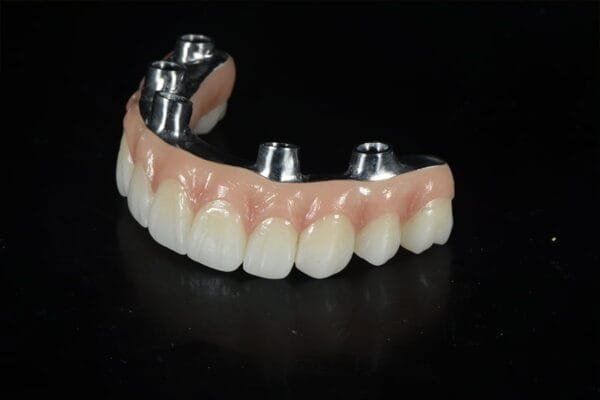
When dentists compare zirconia dental implants with titanium, they are usually not asking “which material is better?” but “which material is better for this patient and this case?”. The two options are different tools, not rivals.
Material properties – metal vs high-strength ceramic
Titanium is a metal. It is tough, slightly elastic, and very forgiving under stress. If the load is high or the bone quality is not ideal, titanium can bend a little before it fails. This is one reason why it has become the standard in implant dentistry.
Zirconia is a ceramic. It is very strong in compression and has high flexural strength, but it is more rigid and less tolerant of bending. When the design is correct and the load is controlled, it performs well. When the design is thin or the forces are extreme, the risk of fracture is higher than with titanium.
In simple terms:
-
Titanium = more forgiving under mechanical stress
-
Zirconia = strong but needs careful design and case selection
This is why SF Dental Lab often recommends titanium implant bodies combined with zirconia abutments and restorations for daily work. You keep the mechanical safety of titanium while still using zirconia where it matters most visually.
Esthetic outcomes – gray core vs white core
From an esthetic point of view, titanium and zirconia are quite different.
Titanium is gray. In thick tissue, this is often not a problem. But in thin biotypes, or if recession appears over time, a gray shadow can show through the gingiva or at the margin of the crown. This can be especially noticeable in the front teeth and high-smile-line patients.
Zirconia is white. The core color is much closer to natural tooth structure. When zirconia is used for the implant body, abutment, and crown, the whole system is visually “tooth-colored”. Even when only the abutment and crown are zirconia on top of a titanium implant, the soft tissue area looks warmer and more natural.
Clinically this often leads to a simple rule:
-
Posterior regions with low esthetic demand → titanium implant + zirconia or porcelain restoration is usually enough.
-
Anterior regions or very esthetic patients → consider zirconia abutments and crowns, or full zirconia implant solutions, to avoid any gray shine-through.
SF Dental Lab pays special attention to this transition zone. We design custom zirconia abutments and multilayer zirconia crowns to blend color and translucency with neighboring teeth or restorations.
Surgical and restorative flexibility
Titanium is available in almost every shape, diameter, connection type, and component system. For the surgeon and restoring dentist, titanium offers a lot of flexibility: angulated abutments, multi-unit abutments, a large choice of prosthetic parts, and a long list of compatible systems.
Zirconia, especially in pure one-piece implant designs, is less flexible:
-
Implant position must be very accurate.
-
Angulation changes are limited.
-
Larger corrections by grinding may weaken the ceramic.
However, when zirconia is used as an abutment and crown material on top of titanium implants, flexibility improves again. The implant itself is still titanium, so standard prosthetic parts and multi-unit solutions can be used. The zirconia part is then designed digitally by the lab.
For SF Dental Lab, this “hybrid” approach is the most practical in many cases:
-
The surgeon works with familiar titanium implant systems.
-
The restorative dentist and lab shape the emergence profile, soft tissue support, and esthetics using zirconia in CAD/CAM.
-
The restoration can be screw-retained and retrievable, which is valuable if repairs are needed later.
Long-term success and clinical data
Titanium implants have been studied for decades. Survival rates and complication patterns are well documented. This makes treatment planning more predictable, especially for full-arch cases and challenging bone conditions.
Zirconia implants have a shorter history. The data we have so far is encouraging, but the time frame is more limited. For single implants and small bridges, especially in the esthetic zone, the results are good. For heavily loaded full-arch zirconia implant systems, the evidence base is still growing.
Because of this, many clinicians follow a mixed strategy:
-
Keep titanium as the “workhorse” for complex or high-risk cases.
-
Use zirconia more boldly in metal-sensitive patients and in anterior esthetic cases, often combined with titanium implants underneath.
SF Dental Lab is built around this reality. We do not push one material as the answer to every case. Instead, we help dentists choose a combination that fits both the clinical situation and the patient’s expectations.
Zirconia vs Titanium Dental Implants – Comparison Table
| Aspect | Zirconia Dental Implants / Zirconia Restorations | Titanium Dental Implants / Titanium Restorations |
|---|---|---|
| Material type | High-strength ceramic (zirconium dioxide, ZrO₂) | Metal (titanium or titanium alloy) |
| Color / esthetics | Naturally white, tooth-like core; excellent in esthetic zones | Gray core; may create gray shine-through in thin gingiva over time |
| Soft-tissue appearance | Very good tissue response; warm, natural look around the margin | Stable, but gray color can affect appearance if tissue is thin or recedes |
| Plaque accumulation | Smooth, polished zirconia tends to accumulate less plaque | Good when polished, but rough/scratched metal can retain more plaque |
| Mechanical behavior | Strong but rigid; less forgiving under bending or extreme load | Tough and slightly elastic; more tolerant of high or uneven forces |
| Surgical flexibility | One-piece zirconia implants require very precise placement | Very wide range of diameters, lengths, and connection types |
| Restorative flexibility | Best in short spans and esthetic areas; grinding must be controlled | Easy to adjust; many stock and custom components, angulated abutments, etc. |
| Long-term clinical data | Good short–mid term data; long-term evidence still growing | Extensive long-term data and high survival rates across many indications |
| Typical indications | Single anterior implants, small esthetic bridges, metal-free requests | Posterior implants, full-arch cases, high-load or complex situations |
| Patient profile | Esthetic-focused, high smile line, thin biotype, metal-sensitive patients | Most routine implant patients, especially where function and durability lead |
| Cost / positioning | Higher lab and component cost; usually offered as a premium option | Generally lower overall cost; standard or baseline option |
| Common “hybrid” approach | Zirconia abutment + zirconia crown on Ti-base or titanium implant | Titanium implant fixture with zirconia or porcelain restoration on top |
| Role in a modern clinic | Esthetic and metal-free upgrade for selected cases | Main workhorse for everyday dental implants across all case types |
Ideal Indications for Zirconia Dental Implants
Not every case needs zirconia, but some situations are almost “made for” zirconia-based solutions. Thinking in indications helps you decide when to actively offer zirconia dental implants instead of titanium-only options.
Patients who prefer metal-free dentistry
Some patients arrive at the clinic with a clear request: “I don’t want metal in my mouth.” They may:
-
Follow holistic or biologically oriented dentistry
-
Have had previous bad experiences with metal restorations
-
Simply feel more comfortable with ceramic materials
For these patients, zirconia is an easy conversation. You can explain that zirconia is a high-strength ceramic, not a metal, and that the visible parts of the implant solution can be completely metal-free.
From the lab side, SF Dental Lab can support a fully ceramic approach (where your chosen implant system allows it) or at least a metal-free solution above the gum using zirconia abutments and zirconia crowns or bridges.
Thin gingival biotype and high-smile-line patients
Esthetics become critical when:
-
The gingival tissue is thin and translucent
-
The patient shows a lot of gum and tooth when smiling
In these cases, the gray shine of titanium can become visible over time, especially if there is any recession. This is where a white zirconia core has a clear advantage: it helps keep the cervical area looking warm and tooth-like instead of gray.
For a central incisor implant in a high-smile-line patient, many dentists now prefer a zirconia-based solution, even if they still use titanium for most posterior implants. SF Dental Lab designs custom zirconia abutments and multilayer zirconia crowns specifically to solve this type of esthetic challenge.
Cases with concern about allergies or sensitivity to metals
True titanium allergy is rare, but patients read a lot online and may come in worried about “metal reactions”. You don’t need to argue with them; you can simply offer options.
A typical approach is:
-
For mild concern:
Use titanium implants, but keep everything above the gum in zirconia (abutment + crown). This greatly reduces direct metal exposure in the mouth. -
For strong concern or documented sensitivity:
Where your implant system and local regulations allow it, consider zirconia implant bodies combined with zirconia restorations, or a system with minimal metallic components.
SF Dental Lab can help document the materials used in each restoration so you can reassure patients about what is actually in their mouth.
Single anterior implants and small bridges
From a purely practical point of view, zirconia tends to work best in:
-
Single-tooth implants in the esthetic zone (incisors, canines)
-
Short-span implant-supported bridges where the load is reasonable and the design can be kept compact
Here, the advantages of zirconia (color, soft-tissue behavior, and low plaque build-up) are very visible, while the mechanical risks are easier to control.
A common everyday setup is:
-
Titanium implant fixture
-
Custom zirconia abutment on a Ti-base
-
Monolithic multilayer zirconia crown
This combination is predictable, esthetic, and relatively easy to maintain. It’s also a workflow SF Dental Lab handles for many overseas clients on a routine basis.
When titanium is still the better choice
Knowing when not to use zirconia is just as important. Titanium is usually still the main option for:
-
Full-arch reconstructions with high functional load
-
Cases with big cantilevers or very limited bone
-
Patients with strong bruxism or other parafunctional habits
-
Situations where frequent adjustments or future changes are expected
In these cases, you can still improve the appearance by using zirconia for the superstructure (for example, a zirconia bridge on a titanium bar, or zirconia crowns on titanium implants), instead of making the entire system from zirconia.
SF Dental Lab often suggests this mixed strategy: let titanium do the heavy work inside the bone and at the framework level, and let zirconia handle the appearance, soft-tissue interface, and final smile.
Conclusion – Where Zirconia Fits in Modern Implant Dentistry
Zirconia dental implants are best seen as a premium option in your implant toolbox. They are especially useful for esthetic anterior cases, thin gingival biotypes, and patients who prefer metal-free or low-metal treatments. Titanium still remains the main workhorse for many situations, but zirconia gives you a way to upgrade soft-tissue appearance and overall smile esthetics when the case is suitable.
As a dental lab in China, SF Dental Lab helps clinics around the world combine titanium fixtures with zirconia abutments and crowns, or plan more advanced zirconia solutions when indicated. If you are already placing dental implants, you can start by choosing a few esthetic cases for zirconia and working with us on the design and material selection. Over time, this gives you a simple, low-risk way to add a metal-free, high-esthetic option to your implant services.

 +86-13530819074