
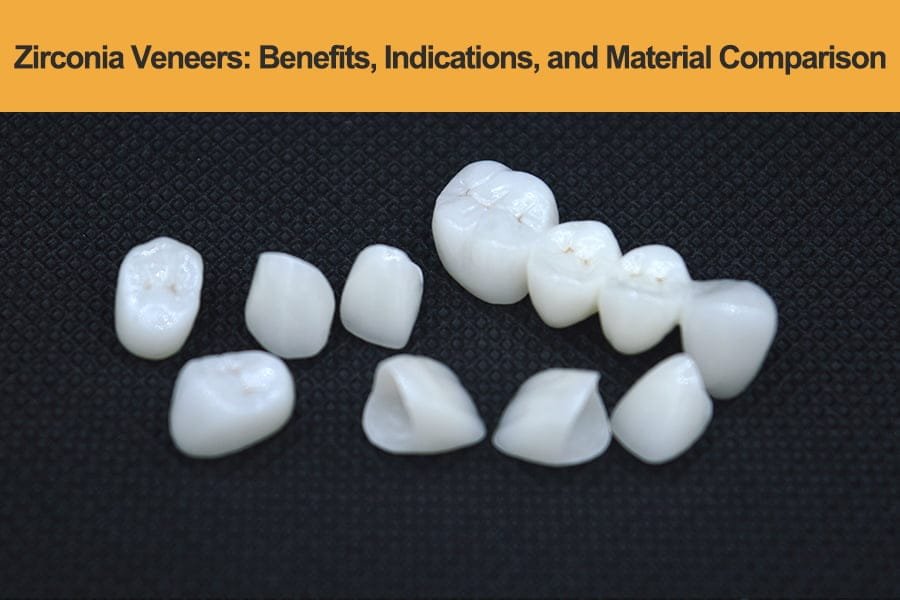
Understanding Zirconia Veneers
Zirconia veneers are one of the most durable and advanced veneer materials available today. Made from high-strength zirconium dioxide (ZrO₂), these veneers provide a powerful combination of beauty, toughness, and long-term reliability—making them an excellent option for patients who need both aesthetics and durability.
What Is a Zirconia Veneer?
A zirconia veneer is a thin, custom-made ceramic shell designed to cover the front surface of a tooth. Unlike traditional porcelain veneers, zirconia veneers are crafted from a high-strength ceramic known for its excellent mechanical performance and resistance to damage. Modern multi-layer zirconia has improved translucency, enabling a more natural and lifelike appearance while maintaining exceptional strength.
How Zirconia Differs from Other Veneer Materials
Most veneers on the market are made from porcelain or lithium disilicate (such as Emax). While these materials offer excellent translucency, zirconia stands out in several ways:
- Higher strength and fracture resistance
- Better masking ability for dark or heavily discolored teeth
- Greater resistance to chipping, cracking, and everyday wear
- More suitable for high-stress bite conditions or patients with bruxism
This balance of beauty and strength is why zirconia veneers have become increasingly popular among dentists and labs.
Why Modern Dental Labs Choose Zirconia for Certain Cases
Today’s dental restorations require both aesthetics and long-term function. Zirconia veneers meet both demands. Labs choose zirconia because:
- They offer predictable performance, even under heavy occlusal load.
- They can achieve natural aesthetics due to multi-layer zirconia technology.
- They provide greater design flexibility, especially for minimal-prep and high-masking cases.
For clinics working with challenging cases—such as dark stumps, worn dentition, or patients with strong bites—zirconia veneers are often the most reliable solution.
Key Benefits of Zirconia Veneers
Zirconia veneers offer a unique combination of durability, stability, and aesthetics, making them one of the most reliable materials for long-lasting smile restorations. As zirconia technology continues to improve, dentists now have a material that can deliver natural beauty without compromising strength—an advantage that many patients value.
Outstanding Mechanical Strength and Long-Term Durability
One of the biggest advantages of zirconia veneers is their exceptional strength. Zirconia has a flexural strength far higher than traditional porcelain or glass-ceramic materials. This allows it to withstand daily chewing forces, temperature changes, and long-term wear without the risk of chipping or fracture.
For patients with a history of fractured restorations or high occlusal load, zirconia veneers offer a safer and more predictable outcome.
Excellent Biocompatibility and Tissue-Friendly Performance
Zirconia is well-known for its compatibility with oral tissues. It is non-irritating, metal-free, and safe even for patients with metal sensitivities. The smooth surface also reduces plaque accumulation, helping maintain better gum health around the veneers.
This makes zirconia a reliable long-term solution for patients who prioritize both health and aesthetics.
Superior Masking Ability for Dark or Discolored Teeth
One of zirconia’s key characteristics is its strong masking ability. While glass-ceramics sometimes struggle to hide dark stumps or heavily stained teeth, zirconia can block out underlying discolorations more effectively.
This is especially valuable in:
- Tetracycline-stained cases
- Post-endodontic teeth with internal discoloration
- Teeth with old composite buildups or metal restorations
Zirconia allows dentists to restore uniform color without compromising translucency in the final result.
Natural Aesthetics with Modern Multi-Layer Zirconia
Older zirconia was known primarily for strength—but newer zirconia formulas now deliver impressive translucency. Multi-layer zirconia blocks provide natural gradient shading, enabling veneers that look bright, lifelike, and harmonious with surrounding teeth.
This gives dentists the ability to create aesthetic outcomes comparable to porcelain or Emax, but with far superior strength.
Ideal for Patients with Bruxism or Heavy Bite Forces
Patients who grind or clench often experience veneer or crown failure, especially with fragile materials. Zirconia veneers are strong enough to handle these conditions and reduce the risk of breakage.
This makes zirconia one of the safest veneer options for cases involving:
- Bruxism
- Deep bites
- Worn dentition
- High-force chewing patterns
Dentists can feel more confident when choosing zirconia for patients with functional challenges.
When to Recommend Zirconia Veneers — Clinical Indications
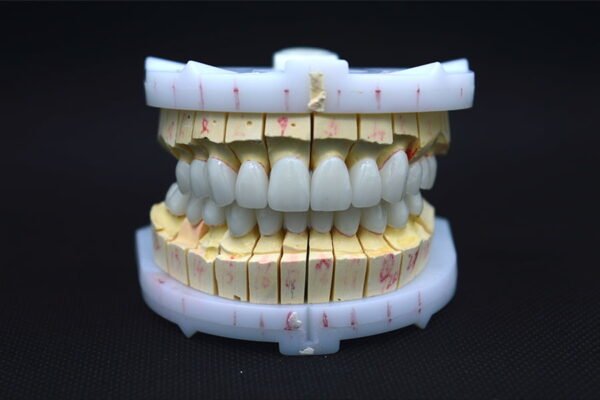
Zirconia veneers are not only strong and aesthetic—they are also versatile. They can be used in a wide range of restorative and cosmetic situations where traditional porcelain or glass-ceramic veneers may not perform as reliably. Understanding when zirconia is the ideal choice helps clinicians achieve predictable, long-lasting outcomes for their patients.
Severely Discolored or Tetracycline-Stained Teeth
One of the most common indications for zirconia veneers is heavy discoloration.
Dark teeth, old restorations, or intrinsic stains often require a veneer material with stronger opacity. Zirconia provides excellent masking ability, effectively blocking unwanted colors without making the veneer look unnaturally opaque.
This makes it suitable for cases where Emax may struggle to hide discoloration.
Patients with Bruxism or High Occlusal Load
Teeth grinding and clenching put veneers under significant stress. While many ceramic veneers risk chipping under these conditions, zirconia maintains its strength even in high-pressure environments.
Zirconia veneers are recommended for:
- Bruxers
- Patients with deep bites
- Individuals with moderate to severe occlusal wear
- Cases where previous veneers fractured due to stress
Their exceptional flexural strength helps prevent failures common in fragile veneer systems.
Full-Smile Rehabilitations Requiring Both Strength and Aesthetics
Full-arch veneer treatments demand a balance of function and beauty. Zirconia veneers offer both, especially for patients with worn, misaligned, or heavily restored dentition.
They provide:
- A unified aesthetic result
- Strong resistance to wear
- Long-term stability for multiple anterior units
This makes zirconia an excellent material for complex cosmetic rehabilitation cases.
Cases with Limited Enamel or Structural Weakening
Some patients have minimal enamel left due to erosion, abrasion, or previous dental work. Because zirconia can perform well even with reduced bonding surface, it is suitable for situations where enamel retention is limited.
Typical scenarios include:
- Cervical wear
- Exposed dentin
- Root canal-treated anterior teeth
- Teeth with multiple old composite restorations
Zirconia provides stability and strength when tooth structure is compromised.
Zirconia Veneers vs. Porcelain Veneers — A Practical Comparison
Porcelain veneers have been a trusted cosmetic solution for many years, known for their natural translucency and beautiful aesthetics. Zirconia veneers, however, offer a different set of strengths that make them suitable for a wider range of clinical challenges. Understanding the differences helps dentists choose the most reliable option for each case.
Aesthetic Appearance
Porcelain veneers are famous for their lifelike translucency and ability to mimic natural enamel. They work especially well for cases where the tooth underneath is already light and does not require heavy masking.
Zirconia veneers, especially newer multi-layer versions, also provide excellent aesthetics. While slightly less translucent than porcelain, zirconia still delivers a bright, natural look — and offers better consistency in shade matching for full-smile cases.
In short:
- Porcelain = best for maximum translucency
- Zirconia = beautiful results with added strength and shade stability
Strength and Durability
This is where zirconia clearly stands out.
Porcelain veneers are thinner and more delicate, which makes them prone to chipping if the patient has heavy bite force or bruxism.
Zirconia veneers have much higher fracture resistance. They maintain their strength even in demanding functional environments, making them a safer choice for patients with deep bites, worn teeth, or grinding habits.
Masking Ability
Porcelain veneers are ideal for light to moderate discoloration but often struggle to hide dark stumps or old restorations.
Zirconia veneers provide stronger opacity for cases such as:
- Tetracycline stains
- Root canal-treated teeth
- Metal buildup underneath
- Severe intrinsic discoloration
Zirconia can mask these issues without making the final veneer look flat or unnatural.
Tooth Preparation
Porcelain veneers typically require a moderate amount of enamel reduction to achieve proper thickness and translucency.
Zirconia veneers can be made thinner while still maintaining strength, which helps preserve natural tooth structure. For minimal-prep cases, zirconia is often the more predictable option.
Longevity and Clinical Reliability
Porcelain performs well for many cosmetic cases, but its long-term success depends heavily on patient habits.
Zirconia veneers are more resistant to daily wear, making them ideal for long-term clinical stability. This reliability is especially useful in multi-unit smile makeover cases.
Which One Should Clinicians Choose?
- Choose porcelain veneers for highly aesthetic, lightly discolored cases where translucency is the priority.
- Choose zirconia veneers for strength, heavy bite forces, dark discoloration, or when the patient needs a durable, long-lasting solution.
Both materials have a place in modern dentistry — the best choice depends on the combination of aesthetics, function, and case complexity.
Zirconia vs Emax Veneers — A Strategic Comparison
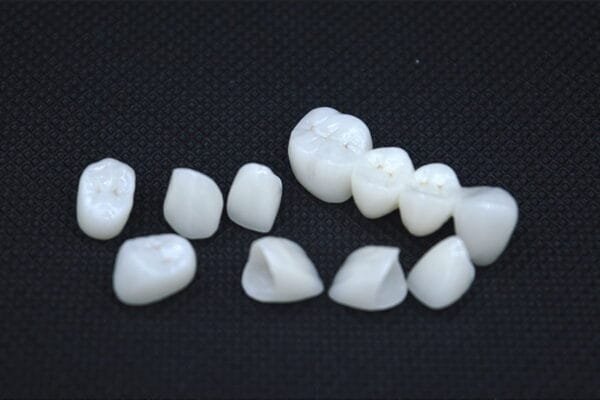
Zirconia and Emax (lithium disilicate) are two of the most widely used veneer materials in modern dentistry. While both can deliver excellent aesthetic results, they perform differently in terms of strength, translucency, and clinical application. Understanding these differences helps dentists choose the right material for each case and ensures predictable long-term outcomes.
Material & Composition Differences
Emax veneers are made from lithium disilicate glass-ceramic, known for high translucency and natural light transmission.
Zirconia veneers, on the other hand, use yttria-stabilized zirconium dioxide (Y-TZP), a polycrystalline ceramic with no glass content.
Key distinction:
- Emax = more glass → more translucency
- Zirconia = polycrystalline structure → higher strength and opacity (better masking)
This fundamental difference shapes how each material is used clinically.
Aesthetic Properties & Translucency
Emax is often considered one of the most aesthetic veneer materials thanks to its excellent translucency and enamel-like appearance. It works well for cases where the underlying tooth structure is already light or only slightly discolored.
Modern multi-layer zirconia, however, has significantly improved translucency while still maintaining its strength. Although slightly less translucent than Emax, zirconia offers a beautiful and natural appearance—especially when layered or characterized by skilled technicians.
Aesthetic guidelines:
- Emax = ideal for natural, high-translucency cases
- Zirconia = ideal for masking, dark stumps, or heavy functional loads
Tooth Preparation Requirements
Both materials allow conservative tooth reduction, but their requirements differ:
- Emax veneers typically need more enamel reduction to achieve an ideal thickness and translucency.
- Zirconia veneers can be made thinner while maintaining strength, which helps preserve more natural tooth structure.
For minimal-prep or non-prep veneer cases, zirconia often provides stronger support without compromising durability.
Strength, Fracture Resistance & Longevity
This is where zirconia shines the most.
- Zirconia has flexural strength ranging from 700–1200 MPa, making it extremely resistant to chipping and fracture.
- Emax veneers typically fall in the 350–450 MPa range, which is strong but still more vulnerable under heavy load.
For patients with bruxism, deep bites, or history of broken restorations, zirconia offers a more reliable long-term solution.
Clinical Indications & Best Use Cases
Emax veneers are generally preferred for:
- Highly aesthetic cases requiring maximum translucency
- Light to moderate discoloration
- Patients with normal bite forces
- Cosmetic improvements for shape, size, and alignment
Zirconia veneers are preferred for:
- Dark or severely discolored teeth
- Bruxers or patients with heavy occlusal pressure
- Full-smile restorations with structural weakening
- Cases requiring superior durability and masking ability
The decision often depends on the balance between aesthetics and functional requirements.
Cost, Lab Workflow & Turnaround Times
- Emax typically requires more delicate handling during fabrication and bonding.
- Zirconia benefits from modern CAD/CAM milling and high-precision sintering, which improves consistency and reduces chipping during production.
For labs with advanced CAD/CAM systems like SF Dental Lab, zirconia veneers often offer more predictable fit, better strength, and efficient turnaround times—especially for large veneer cases.
Summary Table — Zirconia vs Emax Veneers
| Feature | Zirconia Veneers | Emax (Lithium Disilicate) Veneers |
| Strength | Very high | Moderate |
| Translucency | High (multi-layer zirconia) | Very high |
| Masking ability | Excellent | Moderate |
| Best for | Dark teeth, bruxism, full smile rehab | High-aesthetic light cases |
| Prep requirement | Minimal to moderate | Moderate |
| Longevity | Excellent | Good |
| Failure rate | Very low | Higher in high-load cases |
How SF Dental Lab Produces Premium Zirconia Veneers
At SF Dental Lab, every zirconia veneer is crafted through a precise digital workflow that blends advanced technology with skilled craftsmanship. Our goal is simple: deliver veneers that fit well, look natural, and last for many years.
Digital Scanning and Smile Design
The process begins with your digital impression or model.
Our technicians create a detailed 3D design, adjusting shape, contour, and alignment to match the patient’s smile goals. This digital planning helps ensure accuracy before production begins.
High-Precision Milling
Once the design is approved, we mill each veneer from high-quality multi-layer zirconia blocks.
These blocks offer natural color gradients and strong internal structure, giving the veneers both beauty and durability.
Sintering for Strength
After milling, the veneers go through high-temperature sintering.
This step strengthens the zirconia, stabilizes the shade, and ensures long-term durability. Proper sintering is essential for strong, crack-resistant veneers.
Finishing: Staining, Polishing, and Glazing
Our technicians then refine the surface to match the desired shade and translucency.
We add characterizations, polish edges, and apply a final glaze to give the veneer a smooth, lifelike finish that blends naturally with the surrounding teeth.
Quality Check Before Shipping
Every veneer is carefully inspected for:
- Fit accuracy
- Shade consistency
- Surface smoothness
- Marginal precision
- Overall appearance
Only when a veneer passes all checks do we package it securely and arrange fast international shipping.
Zirconia Veneer FAQs
How long do zirconia veneers last?
Zirconia veneers are extremely durable. With proper oral hygiene and regular dental checkups, they often last 10–20 years or more. Their high fracture resistance makes them less likely to chip or break compared to other veneer materials.
Can zirconia veneers look as natural as Emax?
Yes. Modern multi-layer zirconia offers much better translucency than older zirconia materials. While Emax is still known for the highest translucency, zirconia veneers can achieve very natural and lifelike aesthetics when finished by skilled technicians.
Do zirconia veneers feel thicker than porcelain or Emax veneers?
Not necessarily. Although zirconia is a stronger material, modern milling technology allows us to make zirconia veneers very thin—sometimes even thinner than traditional porcelain. With proper preparation and design, they feel completely natural and comfortable for the patient.
Do zirconia veneers require tooth preparation?
Most cases still need minimal tooth preparation to ensure a proper fit and a natural-looking margin. However, zirconia veneers can sometimes be made thinner than porcelain or Emax, which helps preserve more natural enamel.
Can zirconia veneers be used for both single teeth and full smile makeovers?
Yes. Zirconia works well for a single discolored tooth, matching the surrounding teeth precisely. It is also a strong and stable choice for full smile cases, especially when the patient has worn teeth, dark shades, or functional issues. Its durability makes it a reliable material for multi-unit restorations.
Are zirconia veneers suitable for patients who grind their teeth?
Yes. Zirconia is one of the best materials for bruxers because it can withstand heavy occlusal forces without breaking. Many clinics prefer zirconia for patients with a history of chipped veneers or strong bite pressure.
Do zirconia veneers stain over time?
Zirconia is highly resistant to staining from coffee, wine, tea, and everyday foods. The glazed surface stays smooth and color-stable for many years, helping maintain a clean and bright smile.
How should patients care for zirconia veneers to maintain long-term results?
Patients should care for zirconia veneers just like natural teeth—brushing twice a day, using non-abrasive toothpaste, flossing daily, and attending regular dental checkups. For bruxers, wearing a nightguard helps protect both natural teeth and the veneers. With proper care, zirconia veneers stay bright and strong for many years.
What is the turnaround time at SF Dental Lab?
Turnaround times vary depending on case complexity, but most zirconia veneer cases are completed within 5–7 working days after the lab receives the impressions or digital files. We also offer fast international shipping to ensure on-time delivery for clinics worldwide.
What information should clinics provide for the best results?
For the most accurate fit and shade match, clinics should send:
- Clear shade selection
- High-quality photos (front, side, occlusion)
- Bite records
- Digital scans or precise impressions
This ensures the veneers blend naturally with the patient’s smile.
Conclusion — Why Zirconia Veneers Are a Reliable Choice for Modern Dentistry
Zirconia veneers are a great choice for patients who want a smile that looks beautiful and stays strong for many years. With today’s advanced materials, zirconia can offer both high durability and a natural appearance, making it suitable for many situations—from covering dark teeth to restoring worn smiles.
As a professional and reliable dental laboratory, SF Dental Lab focuses on high-quality zirconia production, precise digital design, and reliable global shipping. Whether it’s a single-tooth veneer or a full smile transformation, we are committed to helping dentists achieve beautiful and stable results for their patients.
If your clinic is looking for a trusted partner for zirconia restorations or wants to explore our full range of dental implants and aesthetic solutions, feel free to contact SF Dental Lab for more information or a case quotation.

 +86-13530819074